
 Image 1 of 2
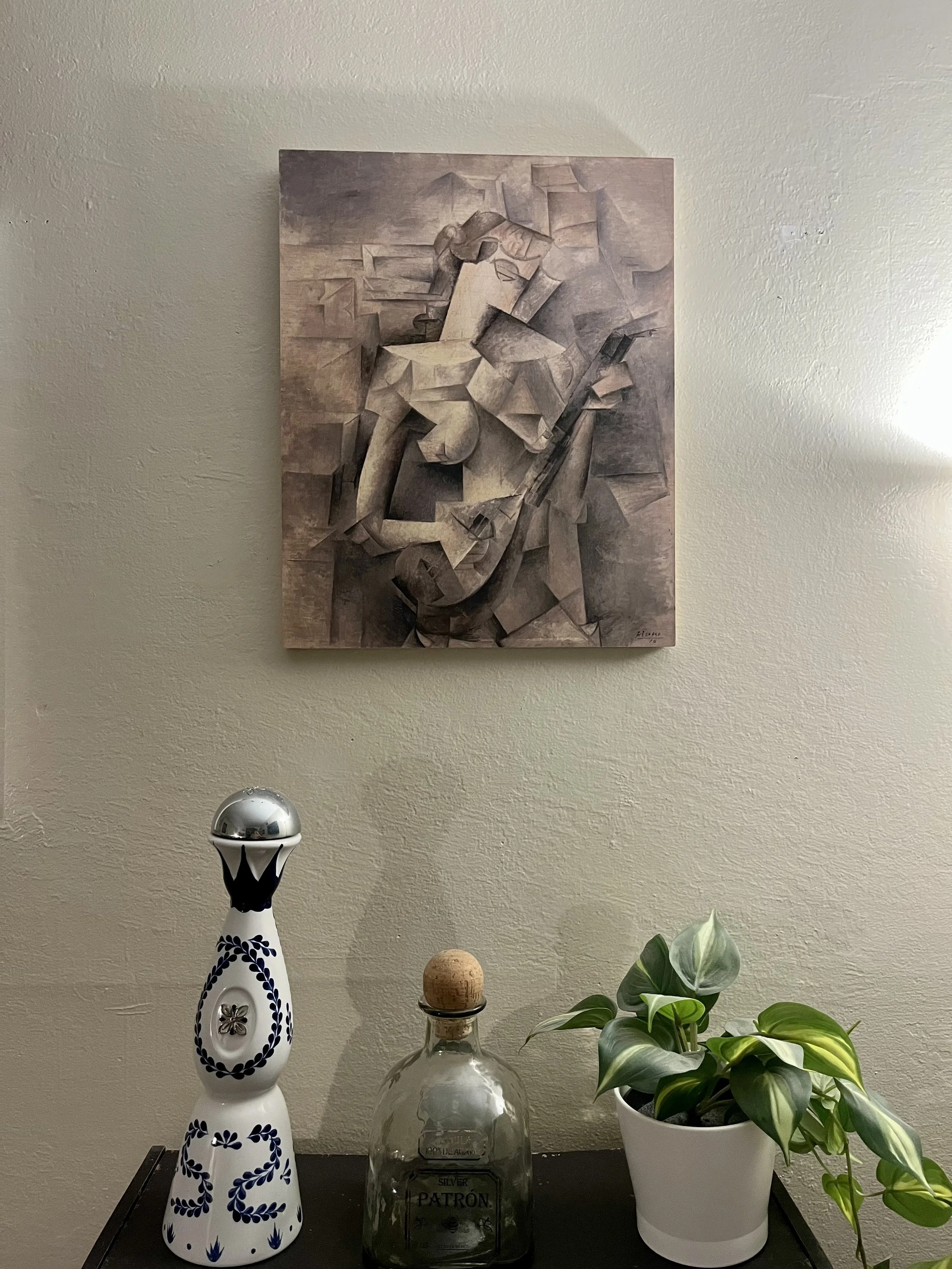 Image 2 of 2
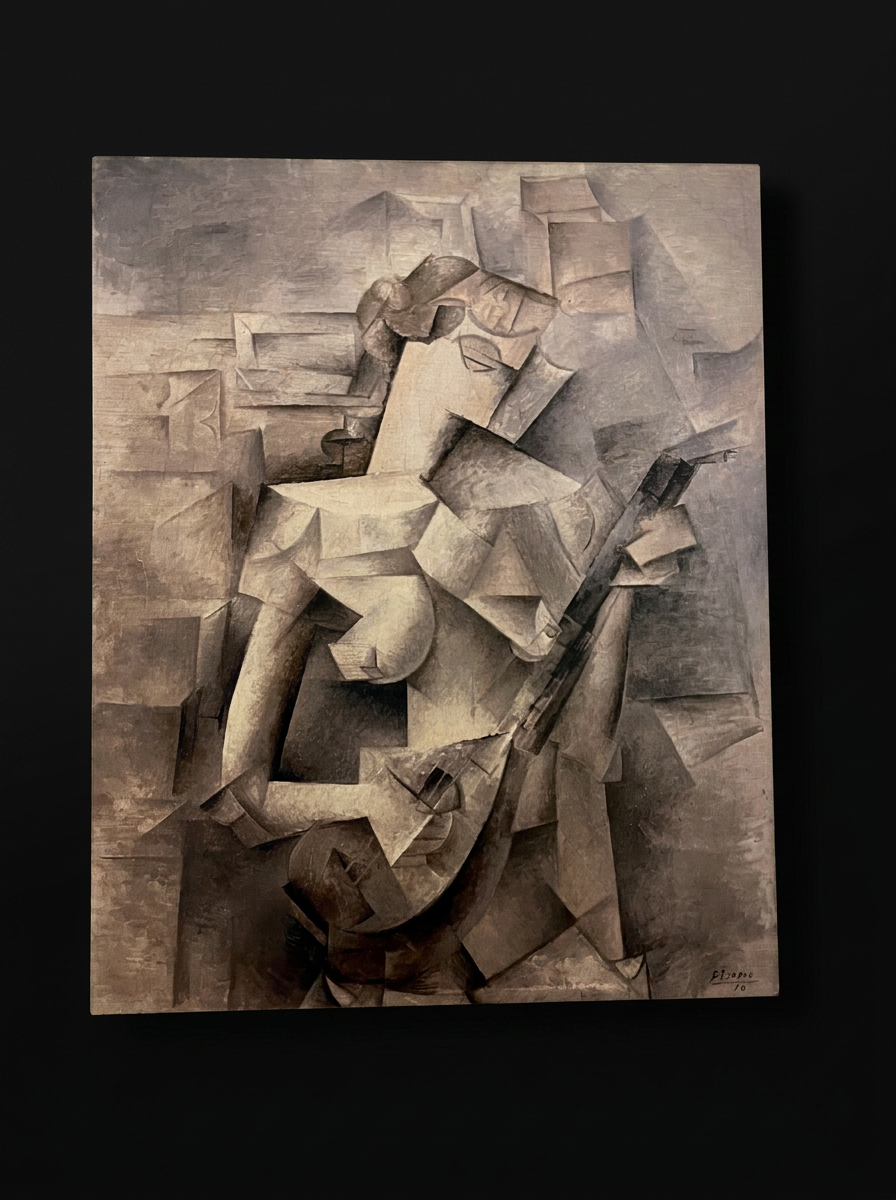
Girl with a Mandolin was painted by Pablo Picasso in 1910 during the height of his Analytical Cubism period. Created in Paris, the work reflects Picasso’s collaboration and artistic dialogue with Georges Braque as they challenged traditional ways of representing reality.
In “Girl with a Mandolin”, the fragmented figure can be seen as Picasso’s attempt to show that reality is more complex than what we observe in a single moment. Instead of presenting a woman playing a mandolin from one fixed viewpoint, he breaks her apart into geometric forms and reconstructs her from multiple angles. The painting suggests that perception is not static—we understand people and objects by combining many different observations over time.
Print on wood
Cubism
1910
Girl with a Mandolin was painted by Pablo Picasso in 1910 during the height of his Analytical Cubism period. Created in Paris, the work reflects Picasso’s collaboration and artistic dialogue with Georges Braque as they challenged traditional ways of representing reality.
In “Girl with a Mandolin”, the fragmented figure can be seen as Picasso’s attempt to show that reality is more complex than what we observe in a single moment. Instead of presenting a woman playing a mandolin from one fixed viewpoint, he breaks her apart into geometric forms and reconstructs her from multiple angles. The painting suggests that perception is not static—we understand people and objects by combining many different observations over time.
Print on wood
Cubism
1910